Scaling Accessibility Across Meta

Making accessibility knowledge usable by product teams and retrievable by AI.

Timeline
2024–2026
Role
Design Lead · AI strategy · Governance · Content strategy
Team
Engineering · Product Management · Product Design · Content Design · Research · Marketing · Learning Program · Legal

Accessibility had relied on specialists catching issues late in development. The European Accessibility Act (opens in new tab) made it business-critical, and as AI accelerated how teams built, late-stage review could no longer keep pace.

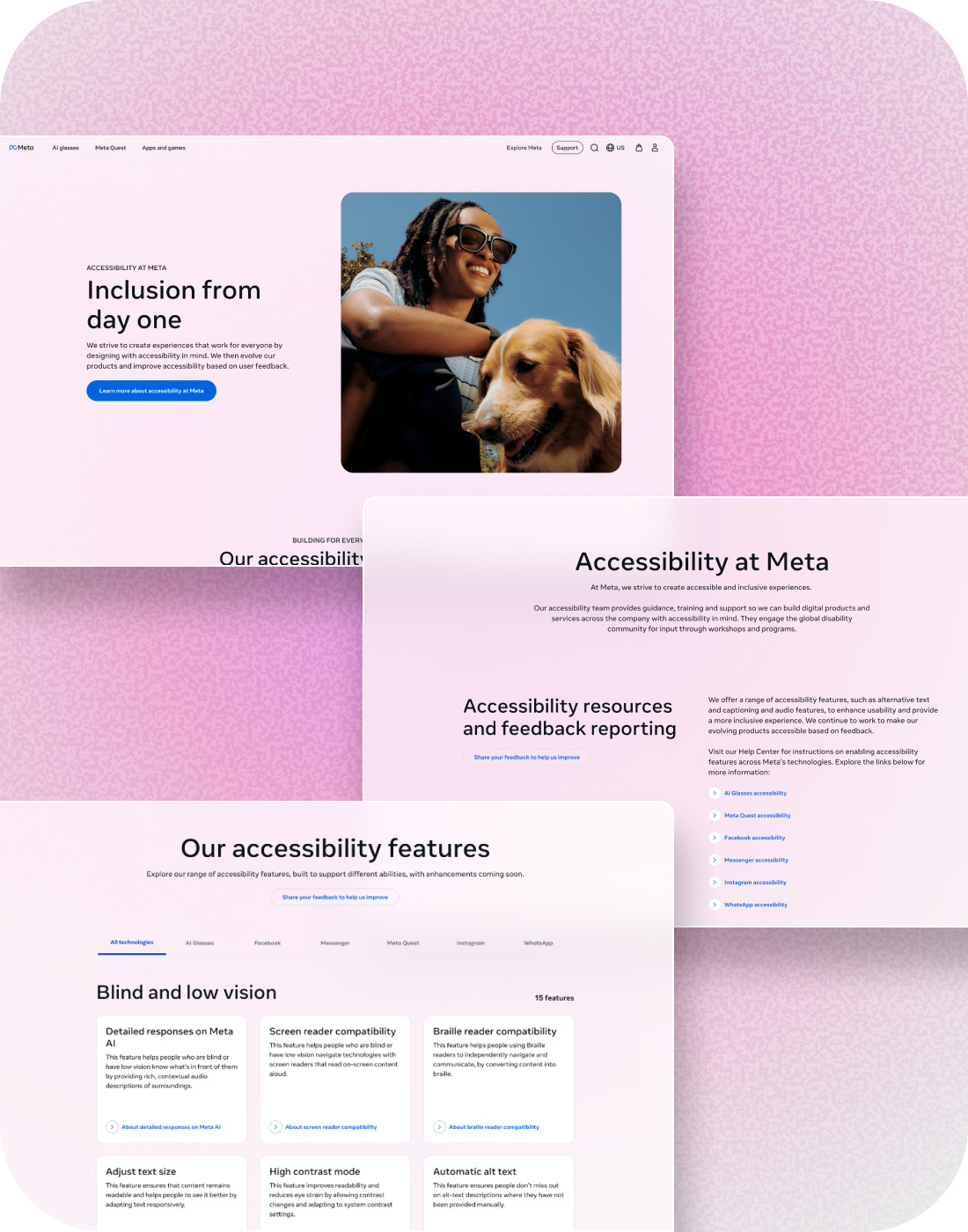
The full case study is confidential. One part of the work launched publicly — it's live at meta.com/accessibility (opens in new tab).

Impact

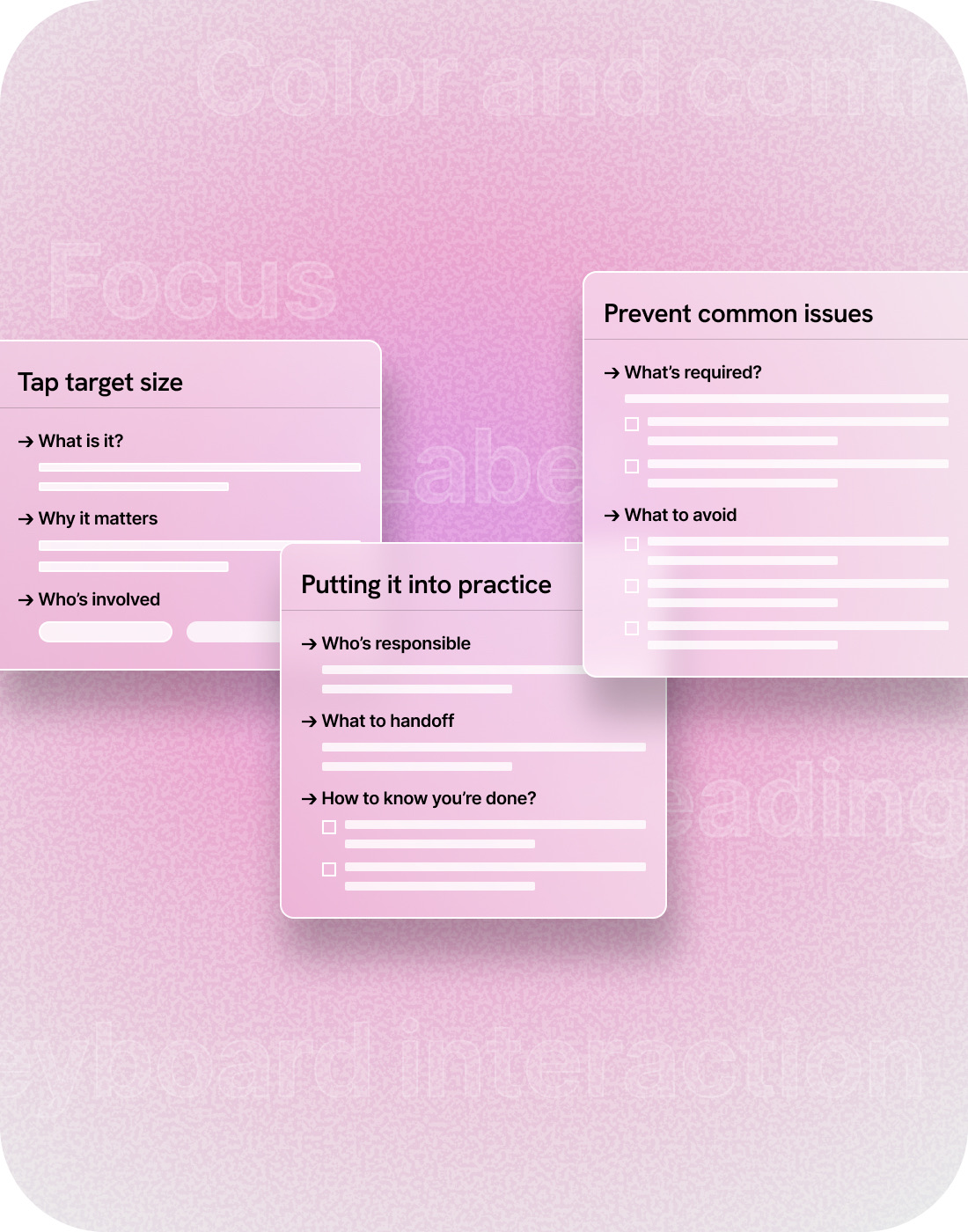
  • Enabled product teams to apply Meta's accessibility standards with less reliance on specialists through a repeatable guidance model organized around product decisions rather than WCAG structure.
  • Scaled accessibility capability across the company: seven live training sessions reached more than 6,000 employees and were later converted into evergreen eLearning completed by more than 600 product designers.
  • Established Meta's first centralized public accessibility destination, bringing together more than 30 accessibility features and 45 Help Center articles into a single experience on meta.com.
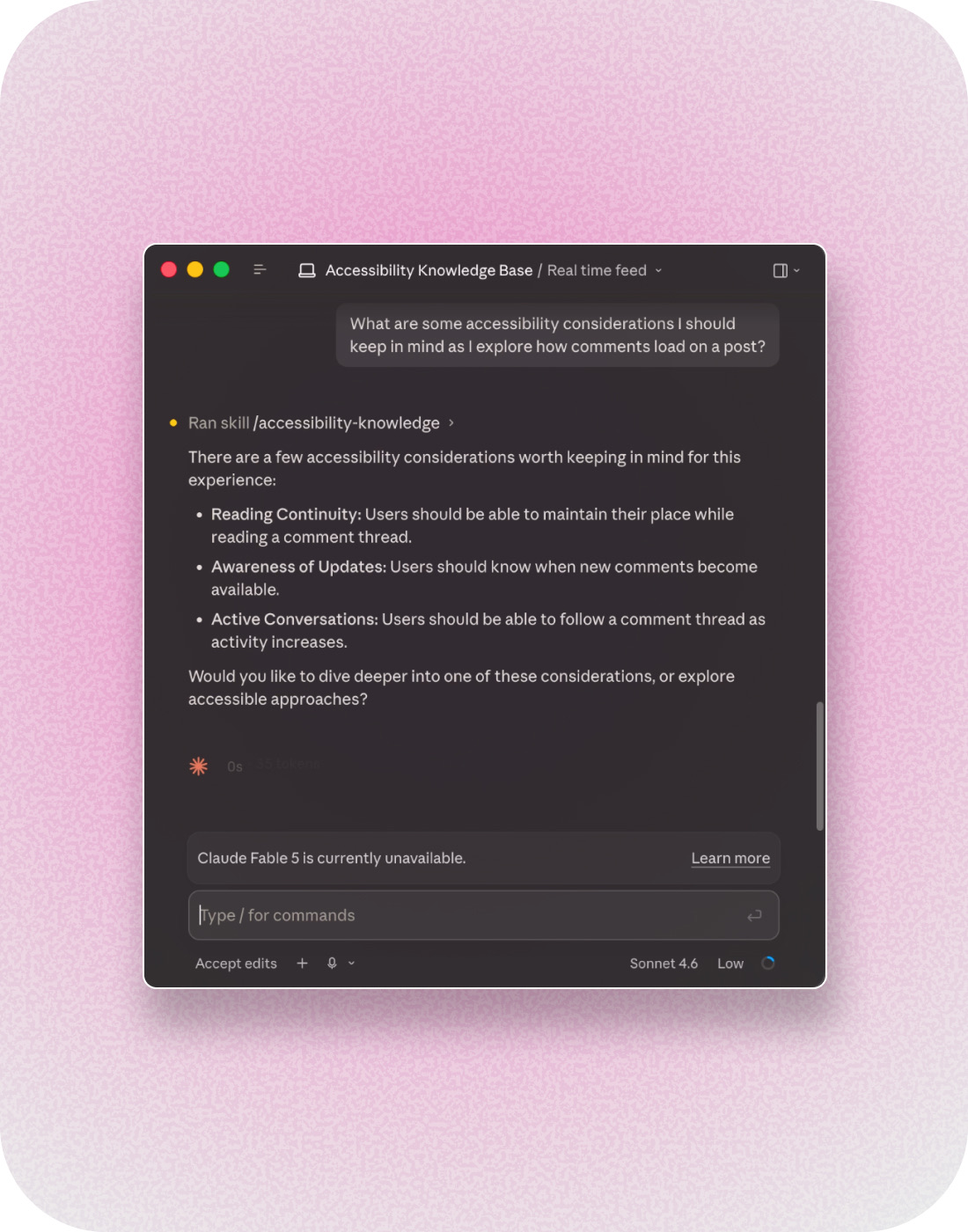
  • Restructured accessibility knowledge around user intent so AI tools could retrieve it, consolidating fragmented content into a governed hierarchy that surfaced the right source more reliably.